
One-star safety rating for Suzuki Fronx SUV
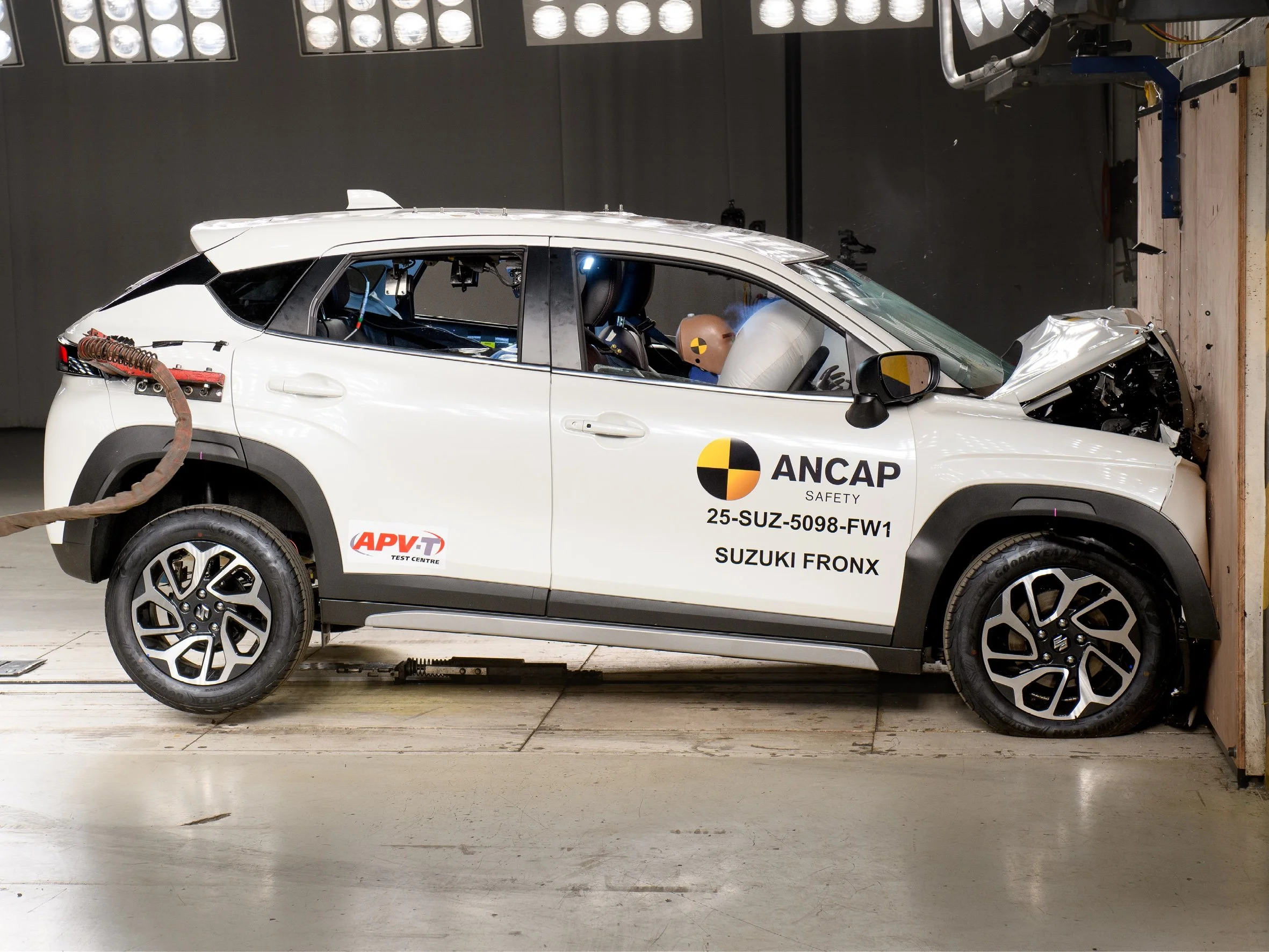
The SuzukiFronx had low levels of occupant protection for both adults and children. Photos: ANCAP
UPDATE: ANCAP’s independent testing of the Suzuki Fronx has resulted in the vehicle narrowly reaching the threshold for a one-star safety rating, following poor performance in key crash tests and low levels of occupant protection for both adults and children.
Since the release today of the findings, Suzuki has responded: “Suzuki Australia has elevated the review of this assessment to a matter of immediate focus and is working directly with Suzuki Motor Corporation in Hamamatsu, Japan, and Suzuki New Zealand to fully understand the ANCAP testing outcomes. This review is being progressed with urgency and at the highest levels of the organisation.”
In addition to its poor overall crash performance, ANCAP testing identified a serious and separate safety concern, with a rear seatbelt failure occurring during the full-width frontal crash test. This component failure has been reported to Australian and New Zealand vehicle safety regulators.
Crash testing showed the Fronx delivered poor levels of occupant protection for both adults and children. In the full-width frontal test, excessive chest loads were recorded for the rear passenger, exceeding ANCAP performance thresholds and resulting in the score being capped under ANCAP assessment protocols.
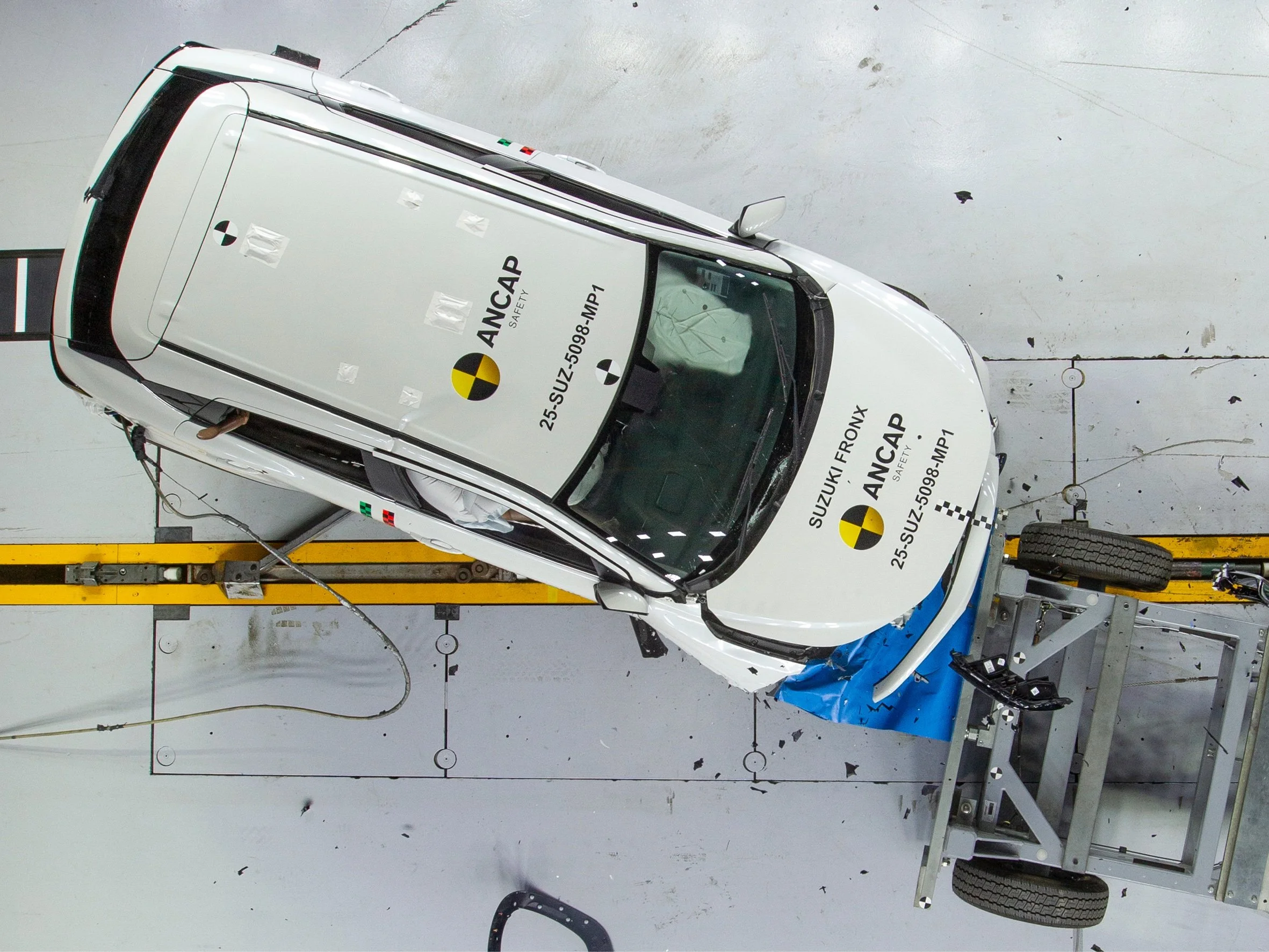
Crash testing showed the Fronx delivered poor levels of occupant protection for both adults and children.
Key body regions of both the 10-year-old and 6-year-old child occupants were also capped at zero points, due to high head acceleration and excessive neck tension.
During the full width frontal test, the rear passenger seatbelt retractor of the Suzuki Fronx failed, resulting in an uncontrolled seatbelt release where the rear dummy became unrestrained, allowing it to strike the rear of the front seat.
ANCAP Chief Executive Officer, Carla Hoorweg, said the findings highlight the importance of independent vehicle safety testing.
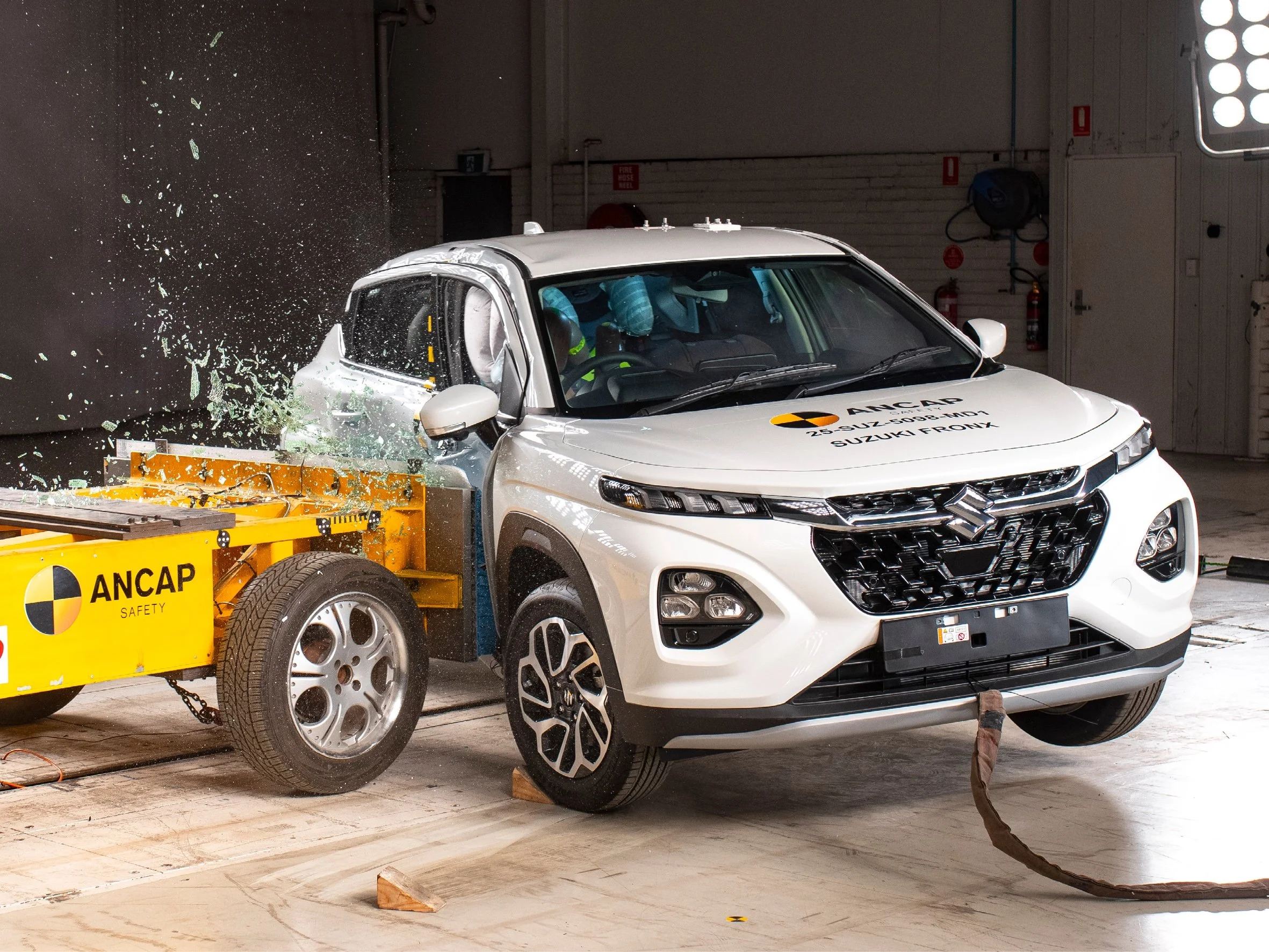
ANCAP recommends adult and child passengers should not travel in the rear seats.
“The seatbelt component failure is rare and serious. ANCAP exists to give consumers confidence, and when our tests reveal results of this nature, we will act in their best interest by communicating our findings promptly and transparently.
“What concerns us is that this particular vehicle could have been purchased by an ordinary consumer, and in an on-road crash this failure could have had serious consequences for the person sitting in the back seat.
“ANCAP’s view is that adult and child passengers should not travel in the rear seats of the Suzuki Fronx until the reason for the failure has been determined and relevant rectifications have been carried out,” said Hoorweg.
Approximately 1000 Fronx were sold in New Zealand.